Data Recovery Tool
File Scavenger®
Services
RAID Recovery
Site Services
Download
Buy Online
Account Login
Language
English
Deutsch
日本語
Français
Italiano
Magazine Reviews
Maximum PC
|
RAID Recovery Services >
Remote Recovery > Preparation > Step 3
Step 3: Create backup copies of the original disks
Cautious customers can create a backup copy of each original disk so that data is still recoverable in case of
an additional disk failure.
A disk can be backed up to a disk image file, which is an exact binary copy, sector by sector of the original disk.
Many disk utilities provide this function.
A disk image file can be created on a drive with free space. If the original disks are large, getting sufficient
disk space to store the disk image files can be difficult. The time taken to back up the disks is another factor
to consider. As of this writing it is common to obtain a backup rate of about 100 GB per hour with an internal drive
as the destination. An external drive or a shared network
folder can be several times slower.
If all member disks in a RAID 5 are in working order and free of corruption (i.e., no new data has been written on them), it is
possible to recover data even if one disk fails.
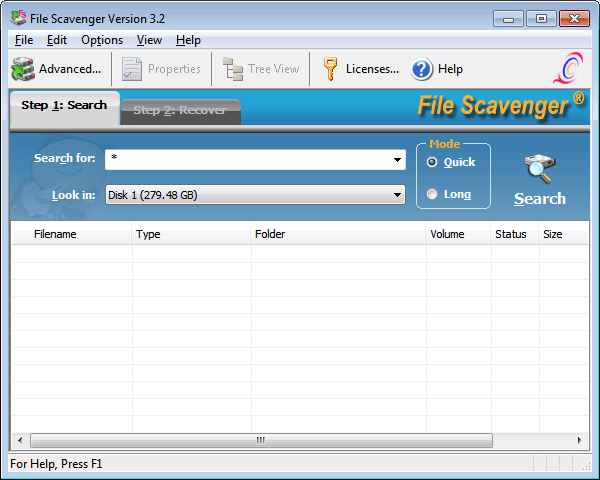
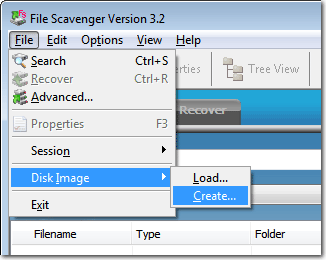
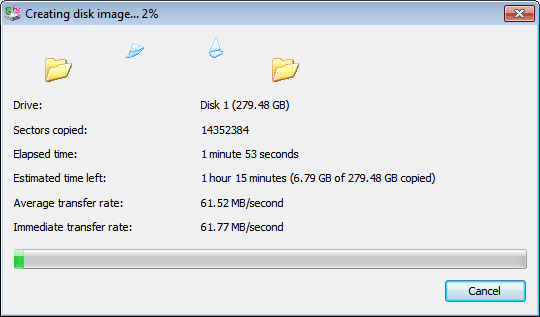
To create a disk image file with File Scavenger®, select the disk number to be copied. Click Options, Trace.
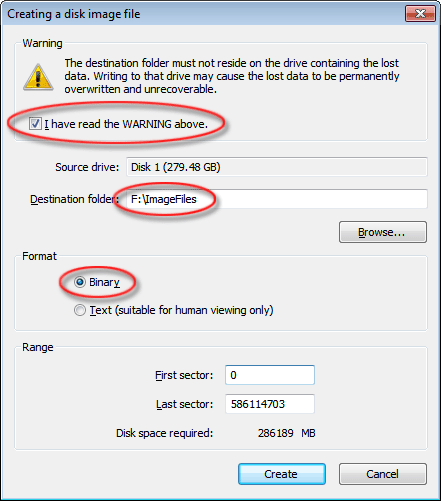
Acknowledge that you have read the warning and select a destination (Trace) folder. Then click Write
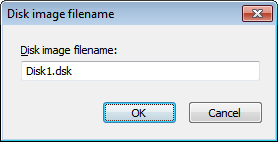
Binary Data and click Dump. Specify a filename such as "Disk1.dsk" if you are copying Disk 1.
Presently there is no progress bar, but it is being added to a soon-to-be-released version. To monitor progress, in
Windows Explorer right click on the drive letter containing
the destination folder and click Properties. Monitor the current Used Space value to determine progress.


In Windows Explorer check the properties of drive F: to monitor copying progress. |
|